
 by Deepak Sawant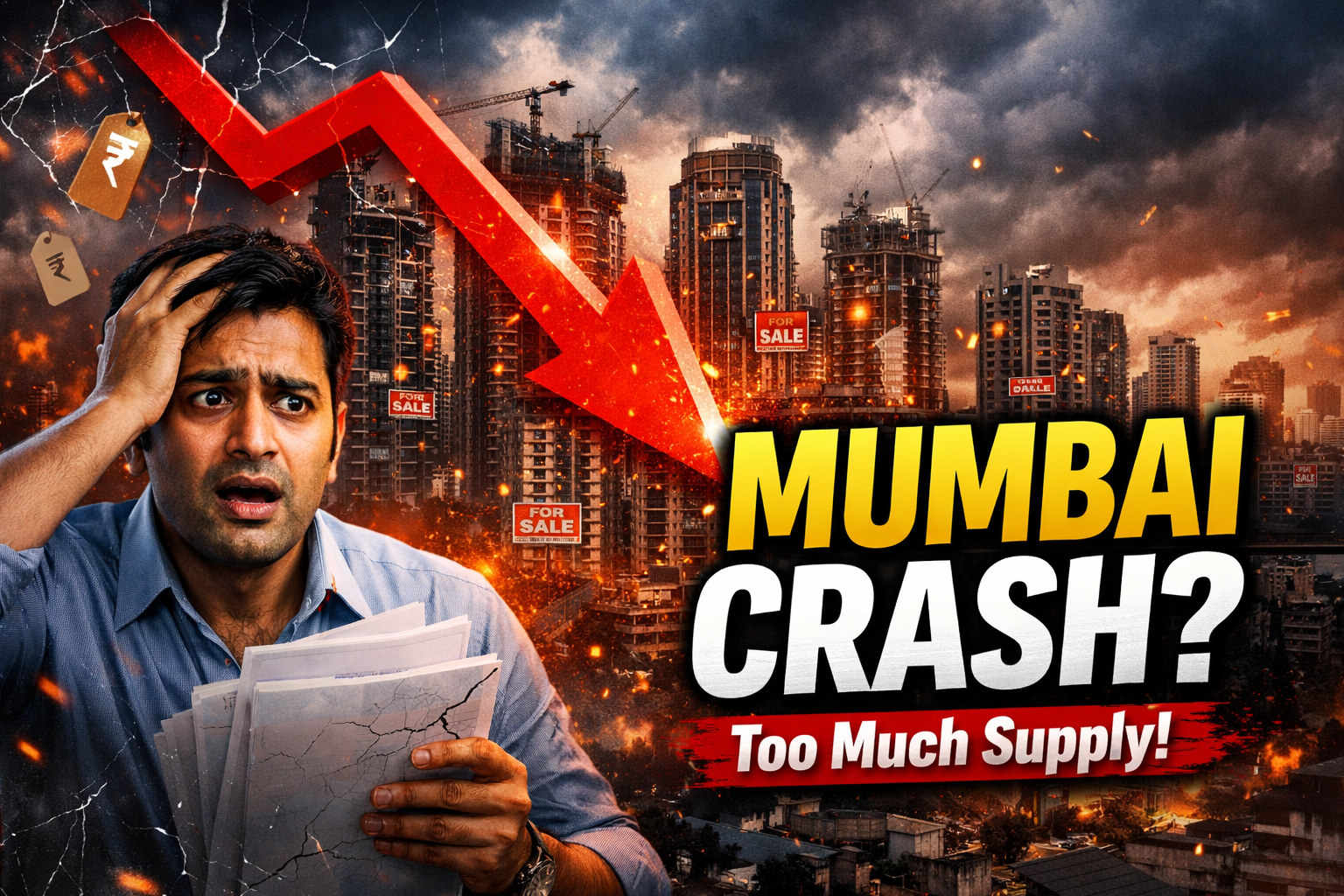
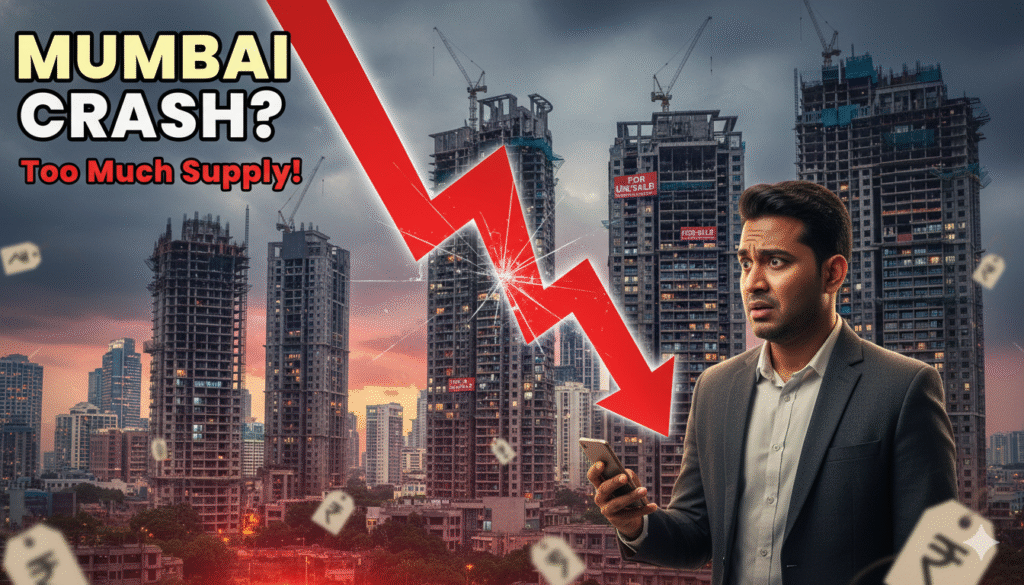
In Bandra and the western suburbs, Mumbai’s property market is experiencing a great luxury supply surplus. Expert estimates anticipate price differences of up to 50% between builders, self-extinguishing demand, and a repeat of Lower Parel’s 2014–15 slowdown. What shoppers should be aware of right now.
Mumbai real estate market 2025 luxury supply bubble
One of the most odd phases in recent memory is the real estate market of Mumbai. For the first time in ten years, the city is confronted with a paradox: record luxury supply landing exactly as customer demand silently vanishes. Industry insiders refer to it as “self-extinguishing demand,” and it might basically change real estate values across the western suburbs—especially in Bandra.
The warning is serious: Bandra in 2025–26 might reflect Lower Parel in 2014–15 — a time when an overabundance of luxury inventory overwhelmed absorption capacity, therefore causing developers to panic and purchasers to be holding depreciated assets.
What Is “Self-Extinguishing Demand” — and Why It Matters in Mumbai
“Self-extinguishing demand” is what and why it is important in Mumbai.
Though rarely talked about publicly, the idea is simple. Think about a Bandra home owner right now. She could seek to improve her flat within the same neighbourhood in a typical market cycle, so naturally become a buyer of a new development. With extensive social rebuilding in progress, though, she will get a free improved apartment as part of her present building’s remodeling project. Her house needs will be covered for the following ten years.
She has, in essence, departed the buyer pool—not because she lacked money or desire but rather because the market served her without her making a rupee on a new purchase.
Multiply this across hundreds of redeveloping communities from Bandra to Khar to Santacruz and you have a structural demand reduction that no amount of new project launches can undo. This is occurring exactly when Mumbai’s largest supply of luxury pipeline ever witnessed is reaching the market.
Bandra’s Coming Supply Glut: Names, Numbers, and the Reclamation Stretch
Bandra alone has a considerable scale of incoming supply. Projects from Hiranandani, Oberoi Realty, Rustomji, Adani Realty, and several medium-tier developers are all set for delivery between 2025 and 2027 along the reclamation seashore spanning the flyover to the roof.
High-profile debuts inside Bandra are expected to probe price discovery at levels that, sources say, “shock the market.” Every board of directors asks the same question: Are there sufficient buyers?
Analysts distinguish three main buyer groups for expensive Bandra real estate. First, those from Kandivali and Andheri who have scaled the riches ladder—moderate but declining demand—partially consumed by the development pipeline. Second, the startup and professional class—including finance professionals, CXOs, and tech founders—remains selective and price-sensitive. Thirdly, the people most immediately affected by development, the within-Bandra upgraders, are being progressively eliminated from the buyer pool. Although HNI and NRI investors continue to be active, they are one-time purchasers who will not return to the market for 15 years or more.
The “Bull Market Trap”: Why Luxury Doesn’t Sell Like Affordable Housing
Developers have traditionally underplayed the basic financial imbalance in luxury real estate. Growing at 8–10%, the temptation is to construct luxury as theoretically rising incomes should correlate with increased demand for premium goods.
But luxurious real estate violates one of the golden rules of retail: there is no repeat purchase. Buying a luxury apartment in Bandra nowadays, a family won’t get another luxury one for ten to fifteen years. Inventory builds up since new supply keeps coming long after consumer demand has been depleted.
The Myth-Making Machine: Why You Never Read “Prices Will Fall”
The infrequent emergence of negative real estate news in general coverage has a structural cause. Seventy percent of the funds in a standard ₹100 crore project originate from buyers rather than from the developer’s equity. Buyers postpone the instant they think prices could drop. Deferred customers translate to blocked cash flows. Every player in the ecosystem, from consultants to newspapers to developers, has a structural incentive to maintain a positive story regardless of underlying supply-demand dynamics; it becomes a self-fulfilling prophecy.
This also implies that the flat’s published price and the price at which it actually sells may differ greatly. Developers frequently advertise at Rs 3 crore and close deals at Rs 2.3–2.4 crore “on the table” — a 20–23% gap never reflected in headline pricing indexes.
Two-Speed Market: The 50% Price Gap Prediction
Two properties on the same Bandra road—from separate developers—priced at a 50% gap is the most startling prediction coming from business circles.
About 40 to 50% of the market comprises builders who obtained land or redevelopment rights at inflated valuations during the 2022–24 stock market increase and who now need sales velocity to service debt. These desperate builders will discount heavily — 20–30% below headline prices. RERA guarantees completion even if people provide badly built work.
The other tier-one construction firms boast solid balance sheets, can afford to keep unsold items, and will not discount. They will launch later or sell at completion. A buyer traveling down the same street could come across a struggling developer at ₹30,000/sqft and a Tier-1 developer keeping firm at ₹55,000/sqft. Both are selling “Bandra luxury.” Just one is under tension.
RERA’s Role: Why Stalled Projects Are Unlikely — But Quality May Suffer
The risk calculus has been significantly altered by RERA. Financial hardship on a developer makes abandonment of consumers no longer feasible. Stalled projects should be uncommon. But poorly built, sparsely finished projects that are technically “complete” represent a real danger. A desperate developer will cut corners on materials and finish crossing the delivery line without technically breaking RERA’s mandate.
How is RERA carpet area calculated? What Does 𝐑𝐄𝐑𝐀 𝐂𝐚𝐫𝐩𝐞𝐭 𝐀𝐫𝐞𝐚 Means
Bandra 2025 = Lower Parel 2014: A Historical Warning
The parallels to Lower Parel in 2014–15 are enlightening and disheartening. At that time, Lower Parel saw its own luxury supply surge—several buildings, many developers all hoping on a premium buyer pool that proved to be much smaller than expected. The outcome was a multi-year period of price stagnation, massive discounting, and a flight to quality that destroyed mid-tier developers while Tier-1 companies remained steady.
Though it took four to six years, Lower Parel eventually soaked the supply. Buyers who bought at 2014–15 peak prices only recovered negligible worth well into the 2020s.
What This Means for Mumbai Homebuyers in 2025–26
Bandra’s lifestyle credentials are authentic and lasting for end-users purchasing to live in the property for 10+ years. First among Tier-1 developers, give those with robust balance sheets, near-complete or ready-to-move inventory, and moderate pricing compared to headline rates top importance. Negotiate always; never accept the advertised price.
For investors, significant price risk in mid-tier projects is carried in the 2–4 year window. Premium segment rental yields in Mumbai continue low at 2–3%. If capital appreciation is the argument, expect a longer holding period than normal projections indicate.
You are ironically the best-positioned player in this cycle for those who benefit from social development. Arriving by redevelopment, your free flat provides the quality and location of a new launch without the expense risk. Resist the urge to top up with another buy at now high values.
TAGS: Mumbai Real Estate 2025 · Bandra Property Prices · Luxury Housing Supply · Mumbai Redevelopment · Builder Discounts · Real Estate Bubble India · Mumbai Property Investment
Disclaimer: This article is for informational and analytical purposes only. It does not constitute financial, legal, or investment advice. Readers should conduct independent due diligence and consult qualified advisors before making any purchase decisions.